
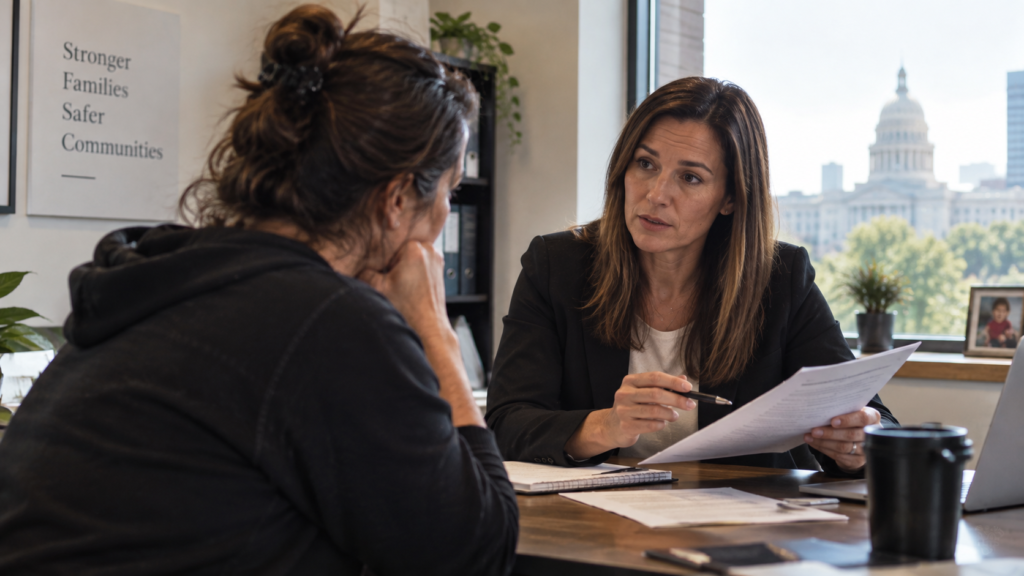
Families rely on social workers, foster care agencies, caseworkers, and child welfare systems to make decisions that can affect a child’s safety. When a warning is ignored, a required visit is missed, a dangerous placement is not addressed, or a complaint seems to disappear inside the system, it can be difficult to know where to report the problem or what kind of report to make.
In Illinois, the correct reporting path depends on what is happening. A report that a child is currently being abused or neglected goes to the child protection system. A complaint about how DCFS or a contracted agency handled a case may go through supervisors, the Advocacy Office, or the DCFS Office of the Inspector General. A civil negligence claim is separate from all of those reporting processes.
Quick Answer: If a child is in immediate danger, call 911. Suspected child abuse or neglect can be reported to the Illinois DCFS Child Abuse Hotline at 800-252-2873, or through the state online reporting system for non-emergency situations. Complaints about DCFS or contracted agency conduct can be raised with the caseworker and supervisor, then the Advocacy Office, while suspected misconduct or rule violations may be reported to the DCFS Office of the Inspector General.
What Does Social Services Negligence Mean?
Social services negligence can involve a child welfare agency or worker failing to take reasonable or required steps to protect a child. Examples can include inadequate investigation, poor supervision, failure to respond to warning signs, unsafe foster placement decisions, missed required visits, incomplete background checks, or failure to follow mandatory procedures.
The Deratany Law Firm LLC handles matters involving child abuse and negligence when harm occurs in homes, foster care, or other caregiving settings. The legal question is not simply whether someone disagrees with a caseworker. It is whether a duty or required procedure was breached and whether that failure caused or contributed to actual harm.
Not every frustrating agency decision is negligence. Child welfare professionals make many judgment calls, and public agencies can have immunity protections. A legal claim usually requires closer analysis of the duty involved, the agency rules, the available records, and the connection between the failure and the injury.
Where Do You Report Immediate Child Abuse or Neglect?
If a child faces immediate danger, call 911. For suspected abuse or neglect, Illinois DCFS operates a statewide Child Abuse and Neglect Hotline at 800-252-2873, also known as 1-800-25-ABUSE. The hotline is available 24 hours a day, seven days a week.
Illinois also provides an online reporting system for non-emergency situations. The online system should not replace emergency help when a child may be in immediate danger. DCFS specifically warns against using ordinary email to report child abuse or neglect because it can delay the response and may not protect confidentiality.
The firm’s child abuse FAQs also discuss reporting suspected abuse and the role of mandated reporters. Teachers, medical professionals, social workers, law enforcement personnel, and other professionals covered by Illinois law have specific reporting duties when they have reasonable cause to believe a child known to them professionally may be abused or neglected.
How Do You Complain About the Way DCFS Handled a Case?
A complaint about case handling is different from a new abuse report. Illinois DCFS recommends first raising the concern with the caseworker or private agency worker. If the issue is not resolved, the next step is usually the worker’s supervisor.
If those steps do not resolve the problem, the DCFS Advocacy Office for Children and Families can respond to complaints, concerns, inquiries, and suggestions about DCFS and agencies under contract with it. The Advocacy Office can help identify the issue, connect the caller with the right staff, and seek a resolution.
The Advocacy Office is not the place to make a child abuse report. It does not investigate new allegations of abuse or neglect. If the concern involves current abuse, use the Child Abuse Hotline or online system instead.
When Should You Contact the DCFS Office of the Inspector General?
The DCFS Office of the Inspector General, often called the OIG, investigates alleged misconduct, misfeasance, malfeasance, and violations of rules, procedures, or laws by DCFS employees, foster parents, service providers, and contractors. It is designed for concerns about wrongdoing within the child welfare system rather than ordinary disagreements about a case.
The OIG accepts complaints from the public and provides an online Request for Investigation form. Complaints can also be submitted by mail or fax, and the OIG lists 800-722-9124 as its toll-free public complaint number.
Allegations involving physical abuse in foster care may require both a child protection report and a separate complaint about agency conduct. The OIG does not replace the Child Abuse Hotline, and its own guidance states that abuse and neglect reports should go to the child protection system.
What Information Should You Include in a Negligence Complaint?
A clear complaint is easier to review than a general statement that an agency failed. Include the names of the child, caseworker, agency, foster placement, or other people involved when known. Record dates, locations, specific events, prior warnings, and the steps already taken to raise the concern.
Useful supporting material can include:
- Emails, letters, text messages, and caseworker communications
- Dates of home visits, missed visits, meetings, and hotline reports
- Medical, school, counseling, or law enforcement records connected to the harm
- Names and contact information for witnesses or other professionals involved
- Photos or documents showing unsafe conditions or injuries
- A written timeline showing when concerns were reported and how the agency responded
Keep copies of what you submit whenever possible. A timeline created close to the events can be especially helpful later because child welfare cases may involve many workers, agencies, placements, and reports over a long period.
What if the Negligence Involves Sexual Abuse?
Sexual abuse in foster care or a social services setting should be treated as a safety issue first. If a child may be in immediate danger, contact law enforcement and the DCFS Child Abuse Hotline. Avoid confronting a suspected abuser in a way that could place the child or reporter at greater risk.
The firm’s work involving sexual abuse in social services focuses on situations where a child or vulnerable person is harmed within a system that was supposed to provide protection. Agency responsibility can involve placement decisions, supervision, prior warning signs, background information, or failures to respond to disclosures.
A child should not be pressured to repeat a detailed account to multiple people outside the proper investigative process. Preserve what was disclosed, seek appropriate care, and allow trained investigators and professionals to handle interviews when possible.
Is Filing a Complaint the Same as Filing a Lawsuit?
No. A hotline report, Advocacy Office complaint, or OIG investigation is an administrative or protective process. A civil lawsuit is a separate legal action seeking accountability and compensation for harm caused by negligence or other wrongful conduct.
The question of whether a family can sue DCFS for failures is legally complex because government agencies and employees may have immunity protections. Claims can also involve private agencies that contract with DCFS, and the duties or defenses may differ depending on the defendant.
A civil case may focus on whether required safety steps were ignored, whether workers failed to follow mandatory procedures, whether a placement was inadequately screened or monitored, and whether those failures caused the child’s injuries. The agency’s own files can become central evidence.
How Soon Should You Speak With a Lawyer About Social Services Negligence?
As early as reasonably possible. Claims involving state agencies, local government entities, private contractors, minors, and wrongful death can have different limitation rules, immunities, and procedural requirements. A family should not assume that the ordinary personal injury deadline applies in the same way to every social services defendant.
Early legal review can also help preserve case files, internal communications, placement records, incident reports, and other evidence that may be difficult for a family to obtain directly. A lawyer can separate the immediate safety report from the longer-term question of civil accountability.
The firm’s published social services case results include claims involving foster care agencies and child welfare systems. Those outcomes do not predict a new case, but they show why detailed records and a careful investigation of agency conduct can matter.
What if Social Services Negligence Leads to a Death?
When a child or other person dies after alleged agency failures, the case may involve wrongful death and survival claims in addition to questions about social services negligence. The investigation may examine what the agency knew, what it was required to do, what warnings were documented, and whether different action could have prevented the death.
A wrongful death case has different damages and procedural issues from a nonfatal injury claim. Families dealing with a death should preserve records and seek case-specific guidance promptly because the legal deadlines can depend on the defendants involved.
Administrative investigations and civil litigation can move on separate tracks. A family does not necessarily need to wait for every agency review to end before getting advice about legal rights.
Frequently Asked Questions
What number do you call to report child abuse in Illinois?
The Illinois DCFS Child Abuse and Neglect Hotline is 800-252-2873, also written as 1-800-25-ABUSE. The hotline is available 24 hours a day, seven days a week. Call 911 if a child is in immediate danger.
Can you report child abuse online in Illinois?
Yes. Illinois offers an online reporting system for non-emergency child abuse and neglect reports. Emergency situations should be handled by calling 911 or the DCFS hotline rather than waiting for an online response.
What is the DCFS Advocacy Office for?
The Advocacy Office handles complaints, concerns, and questions about DCFS and contracted agencies after attempts to resolve the issue with the worker or supervisor. It does not accept new child abuse or neglect reports.
What does the DCFS Inspector General investigate?
The OIG can investigate misconduct, rule violations, and other wrongdoing by DCFS employees, foster parents, service providers, and contractors. It is separate from the system that investigates new allegations of child abuse or neglect.
Can a private foster care agency be liable for negligence?
Potentially, yes. Private agencies that contract to provide child welfare services may have duties involving placement, supervision, investigation, and safety. Liability depends on the specific facts, the agency’s responsibilities, and whether its failures caused harm.
Conclusion
Reporting social services negligence in Illinois starts with identifying the right channel. Immediate abuse or neglect belongs with 911 or the DCFS Child Abuse Hotline, concerns about case handling can move through supervisors and the Advocacy Office, and suspected misconduct within the system may be reported to the OIG.
The Deratany Law Firm LLC represents families in serious social services and foster care negligence matters. If a child was harmed after an agency ignored warning signs or failed to follow required protections, the firm can review the records and explain whether a civil claim may be available.