
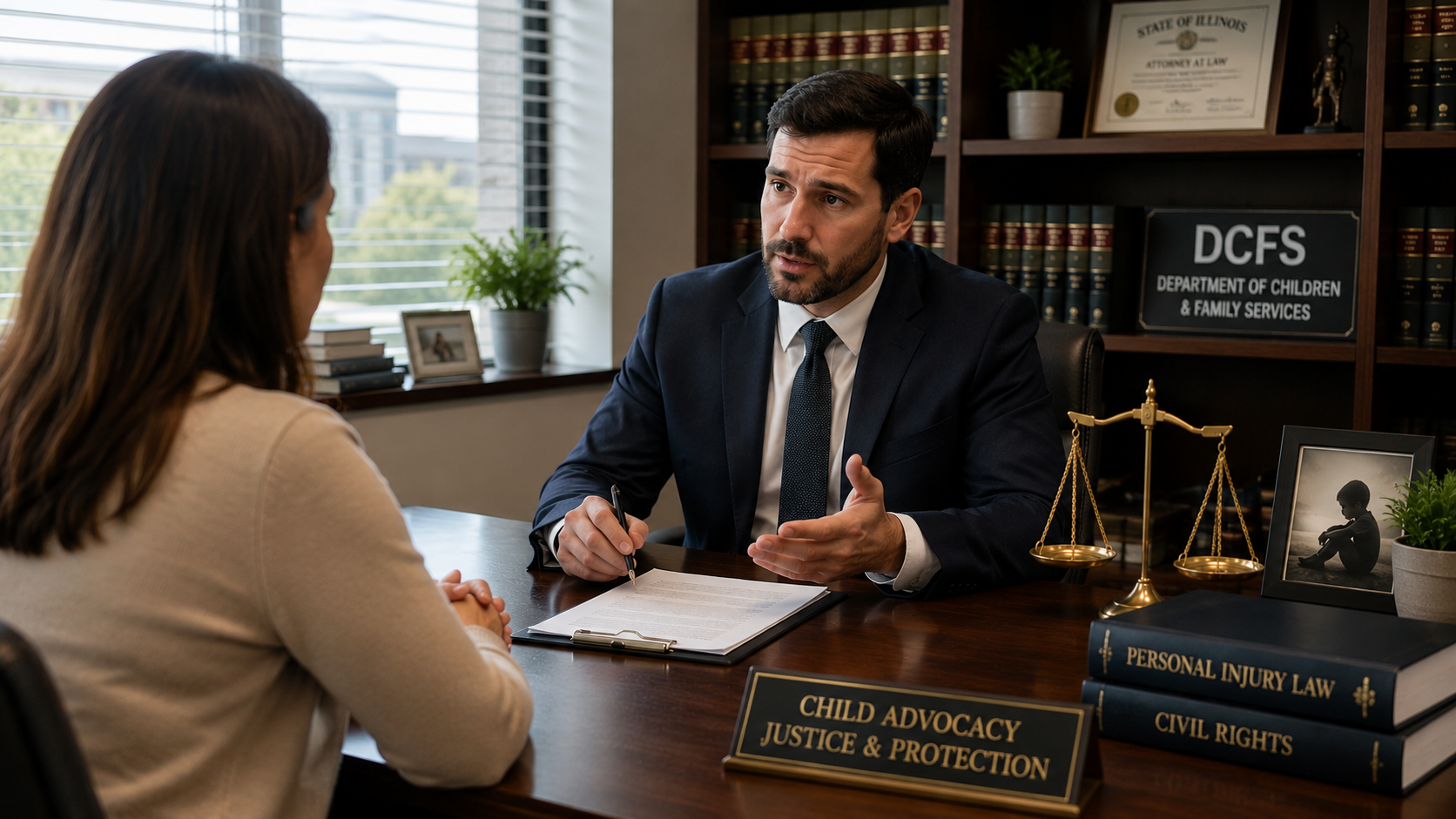
The Illinois Department of Children and Family Services carries a mandate that most people would consider among the most morally serious obligations of any government agency: protecting children who are in danger from abuse or neglect. When DCFS fails in that mandate, and a child is injured, permanently harmed, or killed as a result, the question of whether the agency can be held legally accountable is one that families and advocates have pursued in Illinois courts for decades.
The answer is not a simple yes or no, because government agencies in Illinois have certain statutory immunities that protect them from liability in some circumstances but not all. The key is understanding where those immunities apply, where they do not, and what specific conduct by DCFS gives rise to a viable legal claim. These cases are among the most legally complex in the personal injury and civil rights landscape, and they require attorneys with specific experience in this area of law.
Quick Answer: Yes, you can sue DCFS in Illinois when its failures caused or contributed to a child being harmed, but the immunity protections that apply to government agencies mean not every failure is actionable. DCFS can be sued when it had a duty to act, when that duty was ministerial rather than discretionary, when its conduct was wilful and wanton, or when it failed to perform mandatory statutory obligations. These exceptions to immunity are what most successful claims against DCFS are built on.
The Illinois Tort Immunity Act and DCFS
The Illinois Tort Immunity Act provides broad immunity to local government entities and their employees for acts or omissions in performing governmental functions. This immunity is not absolute, and the statute contains significant exceptions that courts have applied to DCFS cases.
The most important distinction in the immunity analysis is between discretionary acts, which are generally immune, and ministerial acts, which are not. A discretionary act involves the exercise of judgment, policy-making, or decision-making authority. A ministerial act is a required action with no room for personal judgment about whether or how it will be performed. DCFS caseworkers perform many functions, some discretionary and some ministerial, and the specific nature of the act alleged to be negligent determines whether immunity applies.
Wilful and Wanton Conduct
Illinois law specifically removes immunity for conduct that is wilful and wanton, defined as a deliberate intention to harm or a conscious disregard for the safety of others. In DCFS cases, wilful and wanton conduct allegations typically involve caseworkers who had actual knowledge of ongoing serious abuse or danger to a child and deliberately failed to act, or who acted with a reckless disregard for the child’s safety in ways that went far beyond ordinary negligence.
Establishing wilful and wanton conduct requires evidence that the caseworker or supervisor was aware of facts creating a clear danger to the child and consciously disregarded that danger rather than simply making a poor judgment call. This is a higher standard than ordinary negligence, but courts have found it satisfied in cases where caseworkers repeatedly ignored clear warning signs of abuse that were documented in their own files.
Mandatory Duty Claims
Illinois law imposes specific mandatory duties on DCFS caseworkers that are codified in statute and regulation. When a caseworker fails to perform a mandatory duty, such as conducting required home visits within specified timeframes, completing required safety assessments, or investigating reports of abuse within legally required periods, immunity may not apply because there was no discretion involved: the duty was required. Social services negligence claims built on mandatory duty violations are among the most legally viable against DCFS because they avoid the discretionary act immunity that defeats many other government liability claims.
Documenting these mandatory duty failures requires thorough review of the DCFS case file, which includes investigation reports, home visit logs, safety assessment records, and supervisor approval records. These files are critical evidence in any claim against DCFS and should be preserved and obtained through legal process as early as possible.
Claims Involving Foster Care Harm
When a child is harmed while in a DCFS-supervised foster placement, the agency’s liability analysis extends to whether it adequately screened the placement, conducted required monitoring visits, responded to warning signs about conditions in the home, and took action when concerns were raised. Child abuse negligence claims in the foster care context involve both the direct perpetrators of the harm and the agency whose placement and supervision decisions created the conditions in which that harm occurred.
The distinction between neglect and negligence in the foster care context affects both who is liable and what evidence is needed: neglect by a foster parent is distinct from the agency’s supervisory negligence, and both may be actionable in the same case depending on the specific facts.
What a Claim Against DCFS Requires
A successful claim against DCFS requires identifying the specific mandatory duties or wilful and wanton conduct that support liability, documenting the failure through the agency’s own records and internal communications, establishing a causal connection between the agency’s failure and the specific harm the child suffered, and navigating the procedural requirements that apply to claims against government entities, including notice requirements and specific pleading standards.
These cases also typically require expert opinion on what DCFS caseworkers were required to do under applicable standards of practice, what they actually did, and how the gap between those two things contributed to the child’s injury. Child welfare expert testimony is as important in these cases as medical expert testimony is in medical malpractice cases.
Common DCFS liability questions from families considering these claims include the statute of limitations, how to obtain the DCFS case file, and whether the claim can proceed while related criminal proceedings are ongoing.
Given the complexity of these cases, consulting an attorney with specific experience in DCFS and child welfare litigation is essential before attempting to navigate the immunity framework, the procedural requirements, or the evidence gathering that these claims demand.
Frequently Asked Questions
How do I obtain the DCFS case file for my child?
DCFS case files can be obtained through formal records requests, but certain records are protected by confidentiality statutes and may require a court order to access. An attorney handling a DCFS liability claim will typically make formal discovery requests that compel production of all relevant records, including internal communications, supervisory notes, and audit records that may not be available through an ordinary records request.
Is there a time limit for filing a claim against DCFS in Illinois?
Government entity claims in Illinois may be subject to shorter notice requirements than standard personal injury claims. For claims involving child victims, the statute of limitations is generally tolled until the child turns eighteen, but notice requirements to the agency may have shorter deadlines. Consulting an attorney promptly after discovering the basis for a claim is the most important protective step.
Can DCFS caseworkers be individually sued?
Individual DCFS caseworkers can potentially be named as defendants, though the same immunity protections that apply to the agency often extend to individual employees acting within the scope of their duties. Claims against individual employees for wilful and wanton conduct are possible and have succeeded in Illinois courts when the standard is met.
What damages are available in a successful DCFS claim?
Compensation in a successful DCFS claim can include medical and psychological treatment costs, pain and suffering, permanent impairment and its impact on the child’s life, and in wrongful death cases, compensation for the family’s loss. The specific damages depend on the nature and severity of the harm and the causal connection to DCFS’s conduct.
Can I pursue a DCFS claim even if criminal charges have been filed against the abuser?
Yes. A civil claim against DCFS is entirely separate from any criminal prosecution of the abuser. The two proceedings address different questions: criminal prosecution addresses the abuser’s guilt, while the civil claim against DCFS addresses the agency’s failure to protect. The two can proceed simultaneously and one does not need to conclude before the other can begin.
The Bottom Line
DCFS can be sued in Illinois when its failures caused a child to be harmed, particularly when the agency failed to perform mandatory duties, acted in a wilful and wanton manner, or placed a child in a dangerous situation through inadequate screening or supervision. The immunity protections that apply to government entities do not shield DCFS from liability in every case.
The Deratany Law Firm LLC has deep experience in DCFS and social services liability cases throughout Illinois. If a child in your family was harmed because DCFS failed to act when it should have, reaching out to discuss the situation is the most important first step.