
Placing an elderly or vulnerable family member in a nursing home requires a degree of trust that most families do not think much about until something goes wrong. The expectation is that the facility will provide appropriate care, that staff will treat residents with dignity and professionalism, and that the institutional environment will protect rather than harm the people it is supposed to serve. When that trust is violated, the harm caused to a resident is not just physical but represents a profound failure of the system designed to care for them.
Nursing home abuse in Illinois takes many forms, from direct physical harm to emotional mistreatment, neglect, financial exploitation, and sexual abuse. Recognising it can be difficult when the victim cannot or does not communicate freely with family members. Proving it in a legal context requires a different kind of work: systematic documentation, professional expertise, and knowledge of the statutory rights that nursing home residents hold under Illinois law.
Quick Answer: Proving nursing home abuse in Illinois typically requires medical records documenting injuries, expert testimony establishing the standard of care and its violation, documentation of complaints made to the facility, evidence of the resident’s condition before and after the alleged abuse, and testimony from the resident and other witnesses where available. The Illinois Nursing Home Care Act provides specific protections and creates a legal framework that attorneys use to build these cases.
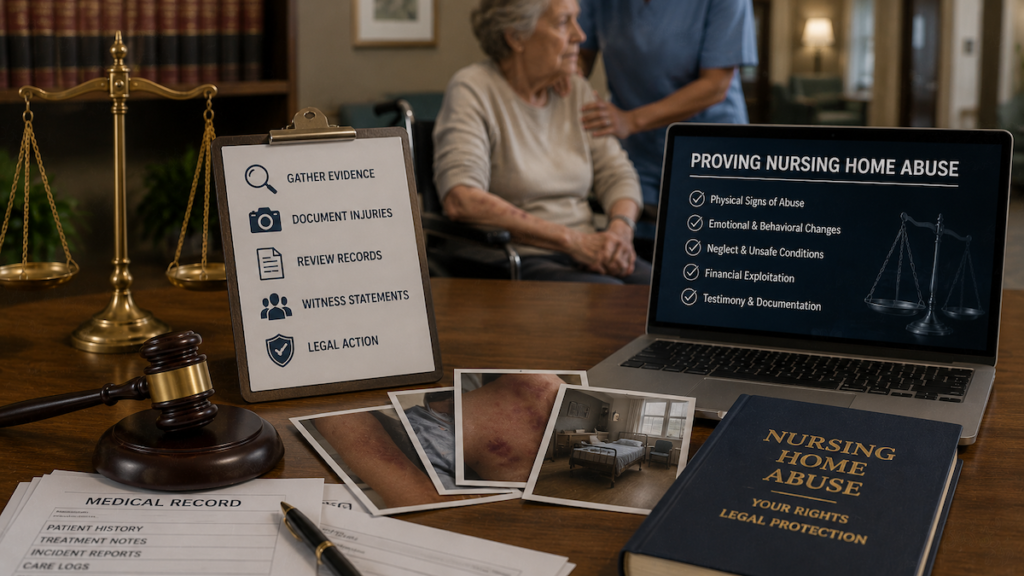
Recognising the Signs of Abuse
Before a legal case can be built, abuse must be recognised. Family members and advocates should look for physical signs including unexplained bruises, welts, or injuries, particularly in patterns inconsistent with accidental falls. Pressure ulcers (bedsores) that develop and worsen despite nursing home treatment are a common sign of neglect. Sudden changes in weight, hygiene, or physical condition that are not explained by the resident’s medical condition warrant attention.
Behavioural signs are equally important. A resident who becomes withdrawn, fearful, or anxious around specific staff members may be responding to mistreatment that they cannot or will not verbally report. Emotional abuse often leaves no physical trace but can be documented through changes in behaviour, statements made to family members, and patterns of staff conduct observed during visits.
Gathering Evidence
The first practical step in building a nursing home abuse case is gathering documentation. Request the complete medical records from the facility, including nursing notes, medication administration records, incident reports, care plans, and any reports generated when falls or injuries occurred. Facilities are legally required to provide these records, and prompt requests are important because documentation can be altered or go missing in facilities that suspect legal exposure.
Photograph any visible injuries during family visits and document dates, times, and the circumstances under which injuries were discovered. Keep a written log of observations made during visits, including the condition of the room, the resident’s hygiene, any statements the resident makes, and the identities of staff present. This contemporaneous documentation carries significant weight as evidence.
If the resident has made any statements about mistreatment to family members, document those statements in writing as soon as possible after they are made, noting the exact words used and the circumstances. These accounts can become critical evidence, particularly if the resident’s condition later deteriorates to a point where they cannot testify directly.
The Role of Medical Expert Testimony
Pressure ulcer cases are a common example. A gerontology or wound care expert can review the progression of a bedsore from early stages to severe tissue damage and testify about whether the nursing staff turned the resident at appropriate intervals, provided appropriate wound care, and escalated treatment in compliance with the standard of care. The expert’s opinion bridges the gap between the observable evidence and the legal conclusion.
Illinois Nursing Home Care Act Rights
The Illinois Nursing Home Care Act creates specific rights for nursing home residents and specific obligations for facilities. Residents have the right to be free from abuse, neglect, and exploitation; to receive appropriate medical and nursing care; to be treated with dignity and respect; and to have their care plans followed. Violations of these rights can support both regulatory complaints and civil litigation.
Illinois also maintains an Office of the Inspector General that investigates abuse and neglect in facilities licensed by the state. Filing a complaint with this office creates an official record and may produce investigative reports that support a subsequent civil case. Regulatory investigations are a separate process from civil litigation but can generate evidence that becomes usable in a lawsuit.
The frequently asked questions about nursing home abuse that families typically have at the outset include questions about what constitutes actionable abuse versus difficult-to-prevent deterioration from underlying health conditions, which requires careful medical analysis.
When Abuse Causes Death
When wrongful death from nursing home abuse is involved, the legal claims become more complex. The estate and surviving family members may have separate causes of action, the statute of limitations analysis changes, and the damages available include compensation for the family’s loss of the resident’s society and companionship.
These cases require particularly prompt action because the death may trigger facility insurance notifications and internal investigations that the facility’s legal team will monitor from the beginning. Having legal representation in place early means that the evidence preservation process, including requests to preserve surveillance footage and electronic records, happens before that evidence is overwritten or destroyed through routine facility processes.
If you believe a family member is being abused or has been harmed in a nursing home setting, consulting an attorney about a nursing home situation as early as possible allows the evidence gathering process to begin while documentation is still fresh and available.
Frequently Asked Questions
What is the difference between nursing home abuse and nursing home neglect?
Abuse refers to intentional acts that cause harm, including physical, emotional, sexual, or financial mistreatment. Neglect refers to the failure to provide appropriate care, whether through staffing shortages, inadequate supervision, or failure to follow care plans. Both are actionable under Illinois law and both can cause serious harm.
How long do I have to file a nursing home abuse claim in Illinois?
The general statute of limitations for nursing home abuse and negligence claims in Illinois is two years from the date of injury or from the date the injury was discovered. As with other personal injury claims, there are exceptions and the specific facts of each situation can affect this deadline. Consulting an attorney promptly is the safest approach.
Can a nursing home resident sue even if they have dementia?
Yes, through a legal guardian, power of attorney, or court-appointed representative. In many cases family members can bring claims on behalf of an incapacitated resident. The resident’s cognitive condition affects how their testimony is used but does not bar the claim.
What damages are available in a nursing home abuse case?
Damages can include medical expenses for treatment of abuse-related injuries, pain and suffering experienced by the resident, emotional distress, and in cases of egregious conduct, punitive damages designed to punish the facility and deter future misconduct. Wrongful death cases also allow compensation for the family’s loss.
Should I report nursing home abuse to a government agency before contacting an attorney?
You can do both simultaneously. Reporting to the Illinois Department of Public Health or the Office of the Inspector General creates an official record and may prompt an investigation. Contacting an attorney at the same time ensures your legal rights are protected and that evidence is being preserved. Neither step negates or delays the other.
The Bottom Line
Proving nursing home abuse in Illinois requires systematic documentation, medical expert support, knowledge of Illinois Nursing Home Care Act rights, and prompt action to preserve evidence that can otherwise disappear. The legal and evidentiary demands of these cases make experienced attorney involvement essential from the earliest stages.
The Deratany Law Firm LLC represents nursing home residents and their families throughout Illinois. If you believe your family member has been subjected to abuse or neglect, reaching out to discuss the situation is a critical first step.