
Placing a parent or grandparent in a nursing home is rarely an easy decision. Families make that choice trusting that trained staff will provide the daily care, supervision, and attention that has become difficult to manage at home, and most visits confirm that trust is well placed.
But neglect does not always announce itself clearly, and it can be easy to mistake for the ordinary effects of aging, especially for families who visit only occasionally or who are not sure what a properly cared for resident should look like. Nursing home neglect is one of the more common forms of vulnerable adult abuse families encounter, and knowing the specific warning signs makes it possible to catch a problem before it becomes a crisis.
Quick Answer: Common warning signs of nursing home neglect include unexplained weight loss or dehydration, bedsores or pressure ulcers, poor hygiene, frequent unexplained injuries, sudden withdrawal or changes in mood, and unsanitary living conditions. Any of these signs alone can have an innocent explanation, but a pattern of several together, especially if staff are evasive when asked about them, points toward a nursing home neglect claim worth investigating.
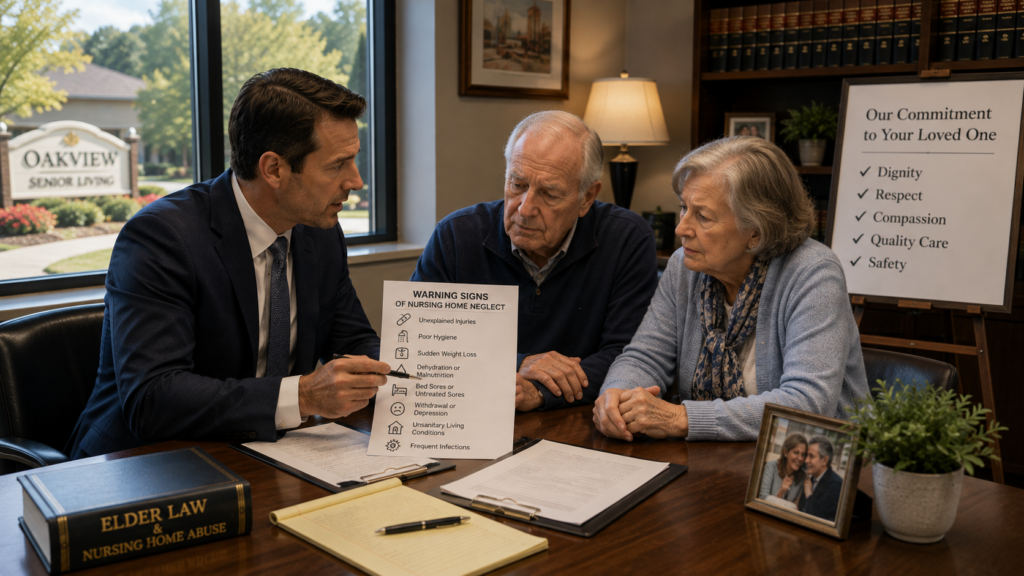
Unexplained Weight Loss and Signs of Dehydration
Sudden or steady weight loss is one of the clearest indicators that a resident is not receiving adequate nutrition or hydration. Staff shortages sometimes mean residents who need help eating are rushed through meals or skipped entirely, and dehydration can develop quickly in elderly residents who are not reminded or assisted to drink water throughout the day. Dry skin, confusion, dark urine, and cracked lips are common physical signs of dehydration that families should watch for during visits.
Bedsores and Pressure Ulcers
Bedsores, also called pressure ulcers, develop when a resident is left in the same position for extended periods without being repositioned. They are almost entirely preventable with proper care, which is why their presence, particularly at an advanced stage, is one of the strongest indicators of neglect rather than a normal complication of aging or illness. Families should ask directly about any sores discovered on a resident’s body and request the facility’s repositioning and skin check records if concerns arise.
Poor Hygiene and Unsanitary Living Conditions
A resident who is consistently dirty, wearing soiled clothing, or has an unkempt appearance during visits may not be receiving the basic hygiene assistance the facility is obligated to provide. The same applies to the resident’s room: soiled bedding, unpleasant odors, or a general lack of cleanliness point to understaffing or indifference rather than an isolated bad day.
Frequent or Unexplained Injuries
Bruises, cuts, and fractures happen occasionally in any care setting, but a pattern of frequent injuries, injuries in unusual locations such as the wrists or upper arms, or injuries the facility cannot clearly explain deserve serious attention. These signs of physical abuse can overlap with neglect, since inadequate supervision that leads to a preventable fall is itself a form of neglect even without any intentional harm involved.
Sudden Changes in Mood or Behavior
A resident who becomes withdrawn, anxious, or fearful, particularly around specific staff members, is communicating something even if they cannot or will not explain it directly. Depression, agitation, and a noticeable change in how a resident interacts with visitors are all documented consequences of neglect and mistreatment in long-term care settings, and families should take these behavioral shifts seriously rather than assuming they are simply signs of aging.
Medication Errors and Missed Treatments
Facilities are responsible for administering medications on schedule and monitoring residents for side effects or interactions. Signs of medication-related neglect include a resident appearing over-sedated, confused in a way that is new or inconsistent, or experiencing a decline in a chronic condition that should be well controlled with proper medication management. Reviewing the facility’s medication administration records is often part of investigating a suspected neglect and negligence case.
Missed treatments extend beyond medication to include skipped physical therapy sessions, delayed wound care, and failure to follow up on specialist referrals a resident’s care plan calls for. A facility that consistently falls behind on a resident’s scheduled treatments, without a clear medical reason, is often understaffed in ways that affect every resident in its care, not just the one whose family happened to notice.
Falls and Inadequate Supervision
Falls are one of the most common and most preventable sources of serious injury among nursing home residents. A facility is expected to assess each resident’s fall risk and put reasonable safeguards in place, such as bed alarms, supervised transfers, or non-slip flooring, based on that assessment. A resident who falls repeatedly without any adjustment to their care plan afterward is a strong indicator that staff are not responding appropriately to a known risk, and each subsequent fall makes the pattern of neglect more difficult for a facility to explain away.
How to Respond When You Notice Warning Signs
Families who notice one or more of these signs should document everything, including photographs of visible injuries or conditions, dates of visits, and specific conversations with staff about their concerns. Requesting the resident’s care records in writing, and reporting serious concerns to the Illinois Department of Public Health, creates an official record that can matter later if the situation does not improve.
If a resident has suffered a serious injury connected to neglect, understanding what to do after a serious injury, from securing medical treatment to preserving evidence at the facility, helps protect both the resident’s health and the family’s ability to pursue accountability. Questions about who covers treatment costs in the meantime are common, and families should not assume they have to absorb those expenses alone while a claim is being evaluated.
These are among the most common neglect case questions families raise once they start looking into what happened.
Frequently Asked Questions
What is the difference between nursing home neglect and abuse?
Neglect involves a failure to provide necessary care, such as food, hygiene, or supervision, while abuse involves an intentional act that causes harm. The two often overlap in practice, and both can form the basis of a legal claim against a facility.
Can I report suspected neglect without proof?
Yes. A report to the facility administrator, the Illinois Department of Public Health, or Adult Protective Services can be made based on reasonable concern, and an investigation is meant to determine whether neglect occurred, not to require the family to prove it beforehand.
Is the nursing home always liable for neglect by its staff?
In most cases, yes, since staff members are generally acting within the scope of their employment when providing resident care, which makes the facility responsible for injuries caused by inadequate staffing, training, or supervision.
What should I do if the facility retaliates after I raise concerns?
Retaliation against a resident or family for reporting concerns, such as reduced care or sudden discharge threats, is illegal and should be documented immediately and reported to state regulators as well as an attorney familiar with nursing home cases.
How long do I have to file a nursing home neglect claim in Illinois?
Illinois generally allows two years from the date the neglect was discovered or reasonably should have been discovered to file a claim, though the exact timeline can vary depending on the specific facts involved.
The Bottom Line
Warning signs of nursing home neglect are rarely subtle once a family knows what to look for, and no single sign has to be proven in isolation. Weight loss, bedsores, poor hygiene, unexplained injuries, and behavioral changes together paint a picture that families should not ignore.
The Deratany Law Firm LLC helps Illinois families hold negligent nursing homes accountable and pursue the care and compensation their loved one deserves. If something feels wrong during a visit, trusting that instinct and reaching out for guidance is always worth the conversation.