
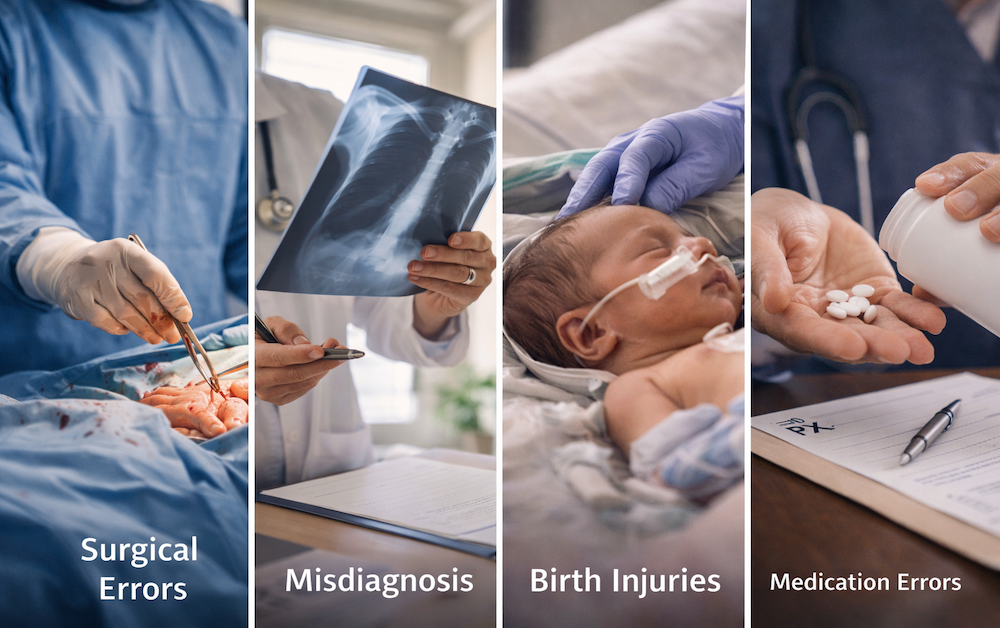
Medical care is meant to heal, support, and protect patients. When something goes wrong because of a preventable mistake, the consequences can be life changing. Medical malpractice happens when a healthcare professional fails to follow accepted medical standards, leading to injury, complications, or even death. In Illinois, thousands of patients experience preventable medical harm each year, often without realizing that what happened qualifies as malpractice.
Understanding the most common types of medical malpractice helps patients recognize when negligence may have occurred and when legal help is needed. These cases are complex, and proving wrongdoing requires evidence, expert testimony, and a detailed understanding of medical standards.
Quick Answer: The most common medical malpractice cases in Illinois include misdiagnosis, surgical errors, medication mistakes, birth injuries, emergency room negligence, anesthesia mishandling, and failures in follow-up care. These cases occur when medical professionals fail to provide the level of care the law requires, leading to serious and preventable harm.
Misdiagnosis and Delayed Diagnosis
Misdiagnosis is one of the most frequent types of medical malpractice. When a doctor fails to identify a condition correctly or delays the diagnosis, the patient may lose critical time for effective treatment.
Examples include:
- Cancer misdiagnosis
• Heart attack or stroke symptoms dismissed
• Infections mistaken for minor conditions
• Autoimmune disorders overlooked
Delayed diagnosis can allow a condition to worsen, causing long-term health complications. In many cases, early detection would have prevented severe damage or even saved the patient’s life.
Surgical Mistakes and Operating Room Errors
Surgery requires precision, teamwork, and strict adherence to safety procedures. When mistakes happen in the operating room, the consequences can be severe.
Common surgical errors include:
- Operating on the wrong body part
• Leaving surgical tools inside the patient
• Unnecessary surgeries
• Damage to organs or nerves
• Improper sterilization leading to infection
Some surgical errors are immediately obvious, while others go unnoticed for months or years. These cases require a thorough medical review to uncover what went wrong.
Medication Errors
Medication mistakes can happen at any point in the prescribing process. These errors can cause dangerous reactions, ineffective treatment, or long-term health problems.
Examples of medication malpractice include:
- Wrong drug prescribed
• Incorrect dosage
• Failure to check allergies
• Harmful drug interactions
• Pharmacy dispensing errors
Even small mistakes can have major consequences, especially for children, elderly patients, or those with chronic conditions.
Birth Injuries and Obstetric Negligence
Birth injuries are among the most heartbreaking types of medical malpractice. Both mothers and infants can suffer harm when medical professionals fail to manage labor, delivery, or prenatal care properly.
Common birth-related malpractice cases involve:
- Failure to monitor fetal distress
• Improper use of forceps or vacuum devices
• Delayed C-sections
• Shoulder dystocia injuries
• Hypoxia leading to brain damage
These injuries can result in lifelong conditions, including cerebral palsy, nerve damage, and developmental delays.
Emergency Room Negligence
Emergency rooms are fast-paced environments, but this does not excuse preventable mistakes. When ER staff fail to follow proper procedures, patients may suffer serious harm.
Examples include:
- Failure to triage properly
• Misreading imaging tests
• Incorrect discharge decisions
• Delays in treatment
• Ignoring critical symptoms
ER malpractice can escalate a treatable condition into a medical emergency or a fatal outcome.
Anesthesia Errors
Anesthesia must be carefully administered and monitored. Even small miscalculations can be dangerous.
Long-term consequences may come from:
- Incorrect dosage
• Failure to monitor breathing or heart rate
• Allergic reactions not managed properly
• Failure to review medical history
• Use of outdated equipment
Anesthesia errors can lead to brain damage, nerve injury, or in the most severe cases, death.
Failure to Provide Proper Follow-Up Care
Medical responsibility does not end when the patient leaves the procedure or hospital. Failure to monitor, treat complications, or provide timely follow-up instructions can cause new injuries or worsen existing ones.
Examples include:
- Not addressing post-surgery infections
• Failure to review lab results
• Delayed communication of critical findings
• Not scheduling appropriate follow-up appointments
These oversights are often overlooked by patients, yet they are a common cause of medical harm.
Nursing Home Negligence
In Illinois, many malpractice claims arise from nursing home care. Staff shortages, poor training, and lack of monitoring can lead to severe consequences for elderly residents.
Situations that may involve malpractice include:
- Bedsores
• Dehydration or malnutrition
• Medication errors
• Falls due to lack of supervision
• Physical or emotional abuse
These cases require careful investigation because records are often incomplete or inaccurate.
Why Medical Malpractice Cases Are Challenging
Medical malpractice claims are more complex than most personal injury cases. They require expert testimony to establish the standard of care and demonstrate how the provider failed to meet it.
A strong case must prove:
- A doctor-patient relationship existed
• The provider acted negligently
• That negligence caused the injury
• The patient suffered actual damages
Hospitals and insurance companies often defend these cases aggressively, making experienced legal representation essential.
Conclusion
Medical malpractice can occur in many forms, from misdiagnosis and surgical mistakes to birth injuries and anesthesia errors. These cases involve serious harm that could have been prevented with proper care. Victims deserve answers, accountability, and fair compensation for the damage they have suffered.
The Deratany Law Firm LLC represents victims of medical negligence throughout Illinois. Their team investigates every detail, works with top medical experts, and fights to secure justice for patients and families affected by preventable medical harm.