
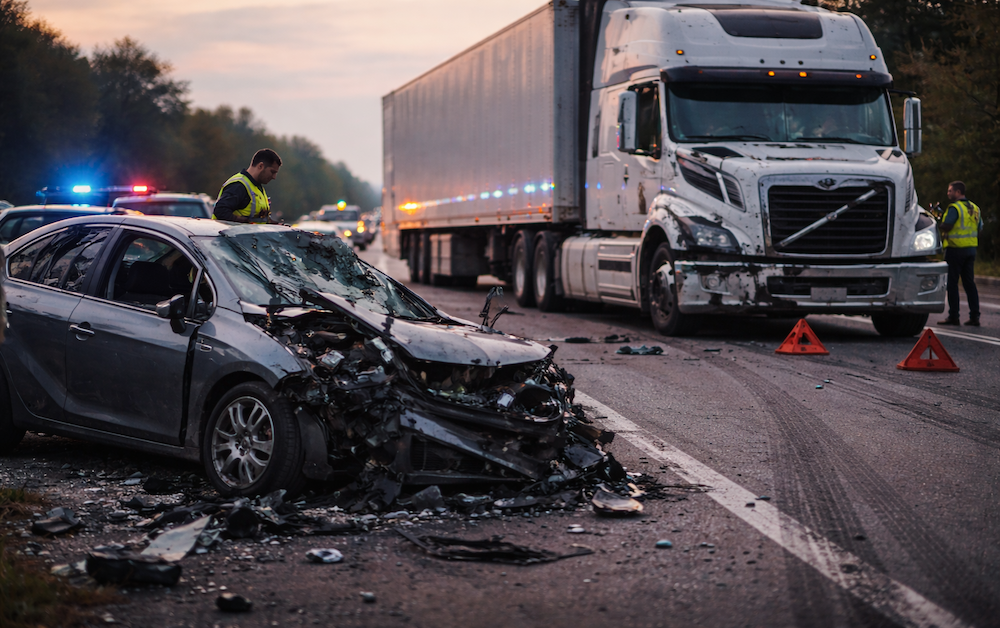
Truck accidents are some of the most devastating events on the road. The size, weight, and force of a commercial truck make collisions far more dangerous than standard passenger vehicle crashes. Beyond the physical damage, these cases are also legally complicated. They involve multiple parties, strict industry regulations, and extensive evidence that must be collected quickly. For victims, navigating these challenges alone is overwhelming, especially while dealing with injuries and recovery.
Understanding why truck accident cases are more complex helps explain why legal representation is so important. These cases require a deeper investigation and a stronger strategy than a typical car crash claim.
Quick Answer: Truck accident cases are more complex than car crashes because they involve multiple liable parties, federal trucking regulations, specialized evidence like black box data, commercial insurance policies, and higher damages. These cases require thorough investigation, expert analysis, and a legal team that understands trucking industry standards and accountability.
Multiple Parties May Be Liable
Unlike a standard car crash where one or two drivers are involved, truck accidents often include several potential defendants. Each one may have played a role in causing the collision.
Possible responsible parties include:
- The truck driver
• The trucking company
• The trailer owner
• The cargo loader
• The maintenance contractor
• A parts or equipment manufacturer
Each party has its own insurance policy and legal responsibilities. Determining who is accountable requires detailed investigation. A mistake in identifying liability can cost the victim compensation they deserve.
Commercial Vehicles Follow Strict Federal Regulations
Truck drivers and trucking companies must comply with federal laws set by the Federal Motor Carrier Safety Administration. These rules govern:
- Hours-of-service limits
• Driver training
• Weight restrictions
• Vehicle inspections
• Maintenance records
• Drug and alcohol testing
If a driver or company violates these rules, it can make them legally responsible for the crash. However, proving violations requires knowledge of the regulations and access to records that trucking companies may not willingly provide.
More Evidence Must Be Collected Quickly
Truck accidents involve specialized forms of evidence that are not present in regular car crashes. This evidence can disappear fast unless an attorney acts immediately.
Key examples include:
- Black box data
• GPS logs
• Driver logs and rest schedules
• Maintenance and inspection records
• Cargo loading documents
• Cell phone data
Truck companies may try to repair vehicles, overwrite digital logs, or deny access to documents if action is not taken quickly. Preserving evidence is one of the most important steps in building a strong case.
Commercial Insurance Policies Are More Aggressive
Trucking companies carry large insurance policies because accidents involving trucks cause severe damage. Because the stakes are high, insurance carriers often fight aggressively to reduce payouts.
They may:
- Assign multiple adjusters to challenge the claim
• Argue the victim was at fault
• Dispute the severity of injuries
• Offer low settlements early
• Delay communication
Victims without legal support often struggle against the complexity and pressure of commercial insurance negotiations.
Truck Accidents Cause More Severe Injuries
Because trucks are significantly heavier than passenger vehicles, injuries tend to be far worse. Victims may suffer:
- Traumatic brain injuries
• Spinal cord injuries
• Complex fractures
• Internal organ damage
• Long-term disability
More severe injuries mean higher medical costs, longer recovery time, and greater financial impact. Calculating fair compensation requires understanding long-term care, lost earning potential, and ongoing rehabilitation needs.
Accident Reconstruction Is Often Necessary
Truck accidents frequently require reconstruction experts to analyze:
- Skid marks
• Vehicle damage
• Impact angle
• Road conditions
• Driver reaction time
• Mechanical failure
Reconstruction helps establish how the crash happened and who is responsible. This step is especially important when the trucking company disputes liability.
The Trucking Industry Has Legal Teams Ready Immediately
Trucking companies often dispatch lawyers, investigators, and insurance representatives to the scene within hours of an accident. Their goal is to protect the company’s interests from the very beginning.
Victims, on the other hand, are usually focused on getting medical help, not gathering evidence. This imbalance is one reason truck accident claims feel so overwhelming without legal guidance.
Higher Damages Require Thorough Documentation
Truck accident victims often require compensation for:
- Emergency medical care
• Surgeries
• Lost income
• Reduced earning ability
• Physical therapy and rehabilitation
• Pain and suffering
• Permanent disability
Thorough documentation is essential to prove the full value of these damages. Insurance companies frequently challenge long-term cost projections, making expert support necessary.
Conclusion
Truck accident cases are far more complex than standard car crashes due to multiple liable parties, strict regulations, specialized evidence, commercial insurance, and the severity of injuries involved. Victims need strong legal representation to protect their rights, uncover the full extent of negligence, and pursue fair compensation.
The Deratany Law Firm LLC has extensive experience handling complex truck accident cases. Their team investigates every detail, identifies all responsible parties, and fights to secure justice for victims and their families.