
Traffic accidents happen every day, but not all accidents involve the same level of legal complexity. When a collision involves a commercial truck rather than a passenger vehicle, the legal and investigative process often becomes significantly more complicated. Truck accidents frequently cause severe injuries or property damage because of the size and weight of the vehicles involved. As a result, the legal claims that follow these accidents often require extensive investigation and specialized legal knowledge.
Commercial trucks operate under strict federal and state regulations that govern driver behavior, vehicle maintenance, cargo loading, and company responsibilities. When an accident occurs, these regulations often become a critical part of determining who is responsible. Investigating whether trucking companies, drivers, maintenance providers, or cargo loaders followed these rules can significantly affect the outcome of a case.
Quick Answer: Truck accident cases are more complex than typical car crash cases because they often involve multiple liable parties, federal trucking regulations, extensive evidence collection, and higher insurance coverage limits. Unlike standard car accidents that typically involve two drivers, truck accident claims may include trucking companies, vehicle manufacturers, maintenance providers, and cargo loading companies. Because of these factors, truck accident litigation requires thorough investigation and experienced legal representation to determine liability and pursue fair compensation.
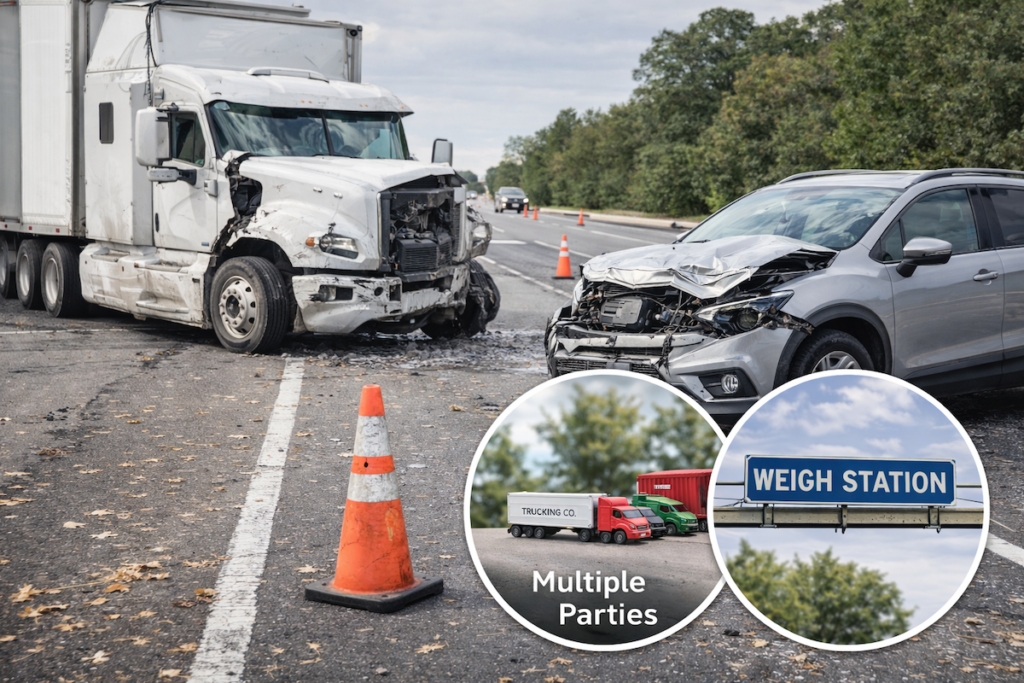
Multiple Parties May Be Responsible
One of the most significant reasons truck accident cases are more complex is that multiple parties may be responsible for the crash. In a typical car accident, liability usually falls on one or both drivers involved. However, commercial trucking accidents can involve a network of companies and individuals connected to the vehicle’s operation.
Potentially responsible parties may include the truck driver, the trucking company, the vehicle manufacturer, the company responsible for maintaining the truck, and even the company that loaded the cargo. Each of these parties may have played a role in creating unsafe conditions that contributed to the accident.
Because of this complexity, attorneys must carefully review contracts, employment relationships, and maintenance records to determine who may be legally responsible for the damages.
Federal and State Trucking Regulations
Commercial trucks operate under regulations established by the Federal Motor Carrier Safety Administration. These regulations are designed to promote safety and reduce the risk of accidents involving large commercial vehicles.
Some of the key regulations include limits on how long truck drivers may operate their vehicles without rest, known as hours-of-service rules. There are also strict requirements regarding vehicle inspections, maintenance schedules, and cargo weight limits.
When a truck accident occurs, investigators often review whether these regulations were followed. Violations such as driver fatigue, improper cargo loading, or neglected vehicle maintenance may serve as evidence of negligence.
Severity of Injuries and Damages
Truck accidents often result in more serious injuries than typical car accidents because of the size and weight difference between trucks and passenger vehicles. A fully loaded commercial truck can weigh up to 80,000 pounds, which means collisions frequently involve significant force.
This increased impact can lead to catastrophic injuries such as traumatic brain injuries, spinal cord damage, severe fractures, and long-term disability. The seriousness of these injuries often results in larger financial claims for medical care, rehabilitation, lost income, and long-term care needs.
Because of the higher stakes involved, trucking companies and their insurers often invest significant resources into defending these claims.
Complex Evidence Collection
Truck accident investigations require collecting a wide range of evidence that may not exist in typical car accident cases. Modern commercial trucks often contain electronic logging devices that record information about driver behavior and vehicle operation.
These devices may store data related to speed, braking patterns, hours of operation, and other driving activities. This information can help investigators determine whether the driver was fatigued, speeding, or otherwise operating the truck unsafely.
Additional evidence may include driver training records, maintenance logs, inspection reports, and cargo documentation.
Higher Insurance Coverage Limits
Commercial trucking companies are required to carry higher insurance coverage than most passenger vehicle drivers. These higher policy limits reflect the potential for severe damages in truck accidents.
While larger insurance policies provide more resources for injured victims to pursue compensation, they also lead to more aggressive defense strategies from insurance companies. Insurers may attempt to minimize payouts or dispute liability, which can make the legal process more challenging.
Experienced legal representation helps ensure that victims’ rights are protected throughout this process.
Frequently Asked Questions
Why are truck accident claims more complicated than car accidents?
Truck accident claims involve multiple parties, federal regulations, and complex evidence that must be analyzed to determine responsibility. These factors make the legal process more detailed and time-consuming than typical car accident claims.
Who can be held liable in a truck accident case?
Depending on the circumstances, liability may extend beyond the driver to include the trucking company, cargo loaders, maintenance providers, or vehicle manufacturers. Each party’s role must be investigated carefully.
What evidence is important in a truck accident case?
Evidence may include driver logs, electronic data from the truck, maintenance records, cargo documentation, and witness statements. These records help determine what caused the accident.
Do truck accident victims receive higher compensation?
Because injuries in truck accidents are often severe, compensation claims may be larger. However, each case depends on the extent of injuries, medical expenses, and other damages.
Conclusion
Truck accident cases involve numerous legal and technical factors that make them more complicated than typical car crash claims. From federal safety regulations to multiple responsible parties, these cases require detailed investigation and strong legal advocacy.
For individuals involved in serious truck accidents, experienced legal guidance can make a significant difference in protecting their rights and pursuing fair compensation. The Deratany Law Firm LLC provides dedicated legal representation for victims seeking justice after complex transportation accidents.