
Traumatic brain injuries are among the most complex and life altering injuries a person can experience. They affect thinking, memory, movement, mood, and overall quality of life. Many victims look completely normal on the outside, yet struggle with symptoms that disrupt daily activities. Because these injuries are not always obvious, proving them in court can be challenging. Lawyers must gather clear evidence, work closely with medical experts, and show how the injury changed the victim’s life.
A traumatic brain injury case is rarely simple. It involves understanding how the injury occurred, documenting the physical and cognitive damage, and demonstrating the long term impact. Families often turn to an experienced attorney because these cases require careful investigation and highly technical medical evidence.
Quick answer: A lawyer proves a traumatic brain injury case by using medical imaging, neurological evaluations, neuropsychological testing, accident reconstruction, witness statements, and expert testimony that connects the accident to the victim’s cognitive, emotional, and physical impairments.
Understanding Traumatic Brain Injuries and Their Challenges
Traumatic brain injuries, often called TBIs, can range from mild concussions to severe brain damage. Even a mild TBI can cause long lasting symptoms like headaches, memory loss, fatigue, mood changes, and concentration problems. Many victims appear physically fine, which sometimes leads others to underestimate the seriousness of the injury.
Because TBIs can affect speech, emotions, and thinking, victims may struggle to explain what they are experiencing. Symptoms sometimes appear days or weeks after the accident, making the timeline more complicated. These challenges require lawyers to rely heavily on medical evidence and expert interpretation.
Key Medical Evidence Used to Prove a Brain Injury
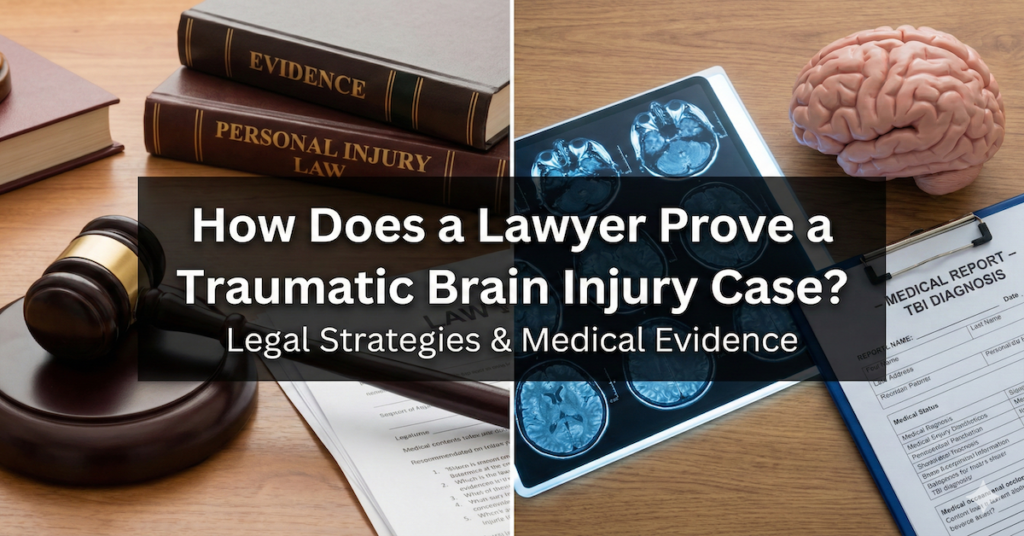
The foundation of any TBI case is medical documentation. Lawyers collect hospital records, emergency room evaluations, and diagnostic imaging. CT scans and MRIs help rule out bleeding, swelling, or structural damage. In some cases, advanced imaging such as diffusion tensor imaging offers deeper insight into brain function.
Neurological evaluations provide detailed information about how the brain is working. Doctors may test reflexes, coordination, memory, and cognitive processing. These tests help identify injuries that cannot be seen through imaging alone.
Another important component is neuropsychological testing. These assessments measure attention, problem solving, memory, reaction time, and behavior. Neuropsychologists compare the victim’s performance to expected norms to show measurable deficits caused by the injury.
Each piece of medical evidence demonstrates how the brain injury affects daily functioning, which is essential in proving the severity of the harm.
How Lawyers Connect the Injury to the Accident
To win a TBI case, it is not enough to show that the victim has symptoms. The lawyer must prove that the accident caused the injury. This connection is called causation. Lawyers begin by gathering all available accident evidence. This may include photos, video footage, police reports, witness statements, and vehicle damage details.
Accident reconstruction experts often play a role in explaining how the forces involved could have caused a brain injury. They analyze vehicle speed, angles of impact, falls, or blunt force trauma. Their findings help the court understand how the accident produced the victim’s symptoms.
Witness accounts also strengthen the case. People who saw the accident or interacted with the victim immediately afterward may recall confusion, disorientation, unconsciousness, or other signs of head injury. These real time observations help show that the brain injury occurred at the moment of the incident. Together, these layers of evidence help the lawyer draw a clear line between the accident and the injury.
The Role of Expert Witnesses in TBI Cases
Expert witnesses are essential because TBIs involve highly technical medical concepts. Neurologists explain the nature of the injury, how it occurred, and how it affects the brain. Neuropsychologists discuss cognitive changes and emotional symptoms. Radiologists review imaging studies and help interpret subtle abnormalities that may not be visible to a non specialist.
Life care planners assess the long term cost of treatment, therapy, medication, and daily assistance. Their evaluations help the court understand the financial impact of the injury over the victim’s lifetime.
Vocational experts evaluate how the brain injury affects employment. Many victims cannot return to their previous job because of memory issues, slowed processing, or physical limitations. These experts quantify lost earning capacity, which is a key part of the damages. Expert testimony provides the scientific foundation needed to prove a TBI claim and ensures the court understands the full extent of the harm.
Demonstrating Long Term Impact and Damages
Traumatic brain injuries often create lasting changes. Lawyers must show how these changes affect the victim’s daily life, relationships, and future. This includes documenting difficulties with memory, concentration, communication, emotional regulation, or mobility. Family members may testify about changes in personality or independent functioning.
Financial damages are also significant. Medical bills, rehabilitation expenses, therapy costs, and lost income all play a role. Some victims require lifetime support, home modifications, or specialized care. Lawyers work with experts to calculate these expenses and ensure the victim receives compensation that reflects their needs.
Emotional damages are equally important. Anxiety, depression, irritability, and reduced quality of life often accompany TBIs. These effects may not show up on a scan, but they deeply influence daily living and long term well being. By presenting a detailed picture of the victim’s struggles and future needs, lawyers demonstrate the true impact of the injury.
Why TBI Cases Require Skilled Legal Representation
Traumatic brain injury cases require a combination of legal strategy, medical understanding, and careful evidence organization. Insurance companies often challenge these cases because TBIs are not always visible. Without strong representation, victims may struggle to prove the seriousness of their injuries.
An experienced lawyer ensures the case includes medical evaluations, expert insights, documented changes in behavior, and clear proof of long term damage. This comprehensive approach strengthens the claim and increases the likelihood of full compensation.
Conclusion
Proving a traumatic brain injury case involves detailed medical evidence, expert support, accident reconstruction, and clear documentation of how the injury changed the victim’s life. Because TBIs are complex and often invisible, building a strong case requires careful investigation and specialized knowledge. With the right legal team, victims can secure the resources and justice needed to rebuild their lives.
The Deratany Law Firm LLC represents individuals and families affected by traumatic brain injuries across Illinois. If you or a loved one is struggling after a head injury, our team can help gather evidence, consult experts, and fight for the compensation you deserve.